
Your Quick Guide to Personalized Outreach at Scale
By Ryane Tully · March 13, 2024

Personalized sales outreach scales when you standardize the repeatable work without removing the context that makes a message relevant. Segment prospects, use verified inputs, personalize one useful variable, generate the outreach assets, review exceptions, send through your existing stack, and measure replies and conversions. Scale should never remove relevance or quality control.
Helpful Summary
Overview: This basic guide will help you do personalized sales outreach at scale. We show you specific ways to personalize messages for a large number of prospects (almost) simultaneously.
Why you can trust us: Pitchlane helps outbound teams create personalized sales videos without recording every message manually. In building software for record-once video outreach, we’ve learned where personalization at scale works and where teams still need a strong prospecting stack.
Why this is important: Scaling a weak template or inaccurate field repeats the same problem across a larger list. Personalize only where verified context changes the message usefully.
Action points: Build a repeatable sequence for segmentation, verified inputs, useful personalization, asset generation, exception review, sending, and measurement.
Further research: Check out these Pitchlane blog posts to learn more about doing sales outreach the right way.
What Makes Personalized Outreach Difficult to Scale?
Personalization becomes expensive when every rep researches, writes, records, and checks every message from scratch. Pure automation creates the opposite problem: one bad field or weak template can be repeated across the entire list.
The practical approach is to automate repeatable production steps while keeping human review for bad data, weak relevance, and unusual accounts. This guide shows where segmentation, prospect data, sales automation, and a personalized video layer fit.
Why Listen to Us?
At Pitchlane, we focus on the record-once part of video outreach: record your pitch once, personalize for every lead. That is the lens for this guide—how to make asset production repeatable without treating every prospect as interchangeable.
What Should Personalization Change?
Personalization should change the recipient’s understanding of why the message is relevant. Useful variables include the account’s use case, current workflow, website context, known product state, or a segment-specific problem. Decorative fields add production and QA work without changing the argument.
Start with one question: if this field were removed, would the message mean the same thing? If yes, the field is probably not the useful variable. Keep the default copy strong enough to work when optional context is unavailable.
How Do You Scale Personalized Sales Outreach?
Use a seven-step operating sequence: segment the audience, source verified inputs, choose the useful variable to personalize, generate the assets, review exceptions, send through the existing stack, and measure replies and conversions. Automation should remove repetitive production work—not the relevance checks that prevent inaccurate or awkward messages.
The operational sequence
- Segment: Group prospects by a shared problem, use case, industry, or buying context.
- Source verified inputs: Decide which CRM, data provider, website, or first-party field supplies each variable. Do not generate outreach from fields you cannot trust.
- Personalize the useful variable: Choose the detail that changes the meaning of the message, such as the account’s use case, current workflow, or website context. A first name alone rarely carries the message.
- Generate assets: Produce the email copy, images, landing-page content, or dynamic content from the approved inputs and templates.
- QA exceptions: Review missing values, malformed names, unusual websites, conflicting account data, and high-value accounts that deserve manual treatment.
- Send through the existing stack: Pass approved assets to the CRM or sequencing tool rather than asking the personalization layer to replace those systems.
- Measure: Track replies and conversions by segment, input source, template, and personalized variable. Use the findings to change the next batch.
The sections below explain how lead selection, automation, and personalized video fit into that sequence.
1. Find the Right Leads
Even the best sales technique or approach is useless if the people you’re reaching out to don’t care about your product or service offering. Our point? Not everyone is your ideal prospect, and this reality affects their response to your sales pitch.
Find the right leads by doing extensive research to identify audience groups and decision-makers most affected by the challenges your offering solves.
Say you’re doing sales prospecting for a B2B brand.
Start by reviewing the websites of target businesses and identifying the problem, role, or workflow that makes the account relevant. A data or discovery tool can supply contact and company fields, but verify any field that will appear in the message. Compare the surrounding prospecting tool categories before assigning one product every job.
Also, multi-channel lead research gives you more information to personalize your outreach so don’t limit your search to just their website.
Instead, check out your prospective business’ social media platforms and the personal accounts of their key team members. You can also engage with their social content for a while so they’re already warmed up by the time you reach out.
Once you’ve shortlisted the best leads, segment them according to their customer profile and get ready to pitch.
2. Use Automation (But Make It Seem Natural)
Business prospecting tools cover different stages of the workflow: discovery, enrichment, CRM, sequencing, personalization, and analytics. Connect the stages rather than assuming one product owns the full process.
But when you use automation, it is important to make your approach and messaging natural, humanizing communications with every lead. Basically, you want recipients to feel like you’re talking to just them, not addressing a room full of people through a megaphone.
So, once you’ve shortlisted the right leads and found their details, craft compelling, natural-sounding emails that clearly state your offering and can be repurposed for various prospects.
You can also make your automated outreach more personal and human-like by:
- Addressing the prospect by their first name (in the subject line and/or within the email) using merge tags.
- Adding details—like information from their website—that show you know and have thoroughly researched your prospect.
- Attaching your sales videos or product demos to the email to give recipients a sneak peek of what’s to come if they patronize you.
3. Personalize at Scale with Pitchlane
Personalizing outreach at scale means reusing a sound message structure while changing the context that matters for each segment or recipient.
One option is to add personalized video as a media layer inside the campaign. Pitchlane supports a record-once workflow: record your pitch once, personalize for every lead.
Here’s a step-by-step guide to personalizing outreach at scale using Pitchlane:
Step One: Get your leads and segment them based on their common characteristics.
Step Two: Record a video stating the pain points of one of your lead segments.
Step Three: Generate the personalized assets, then review missing or mismatched records before sending.
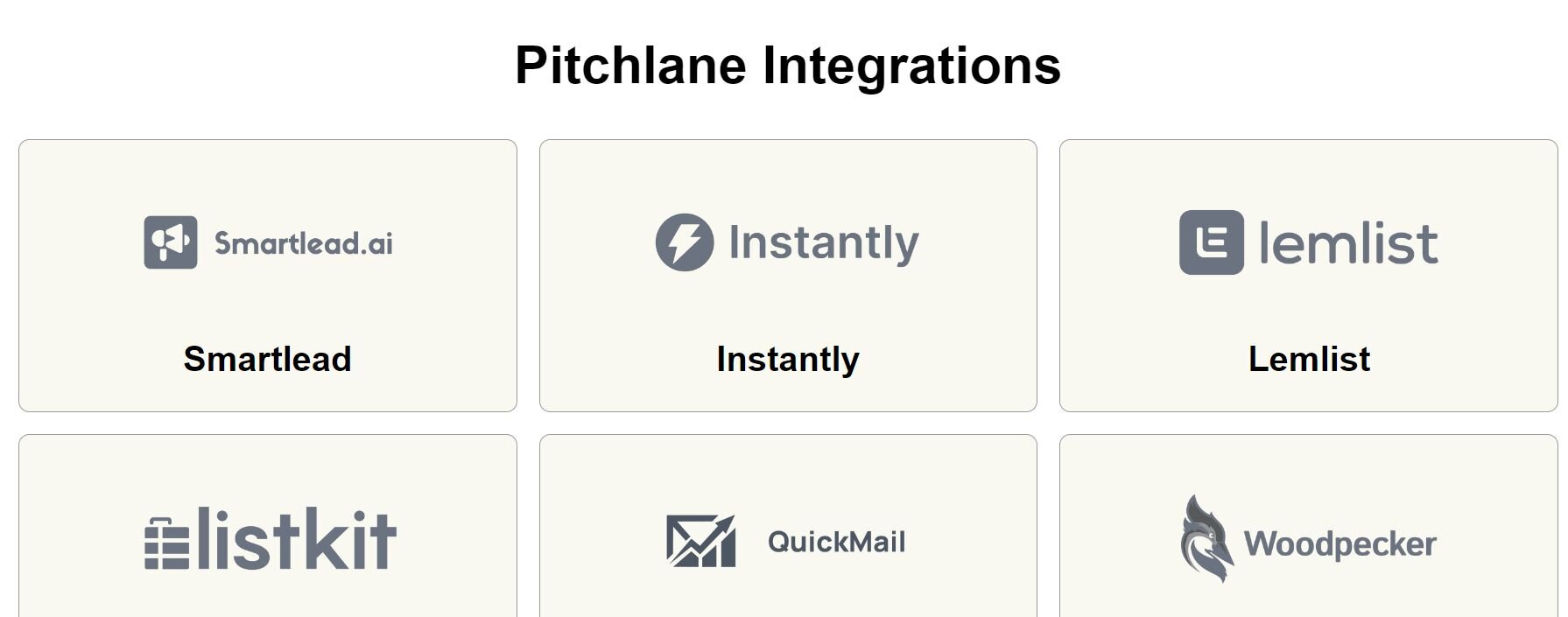
Step Four: Draft an email template and push the approved assets into an existing workflow. Pitchlane integrates with tools including Instantly, Smartlead, lemlist, HubSpot, and Apollo.
Step Five: Track replies and conversions by segment and template, then use those results to revise the next batch.
Keep the spoken pitch reusable rather than scripting a prospect’s name or company into every video. Add those variables to the email, title, or landing-page context, and include a clear CTA in both the email and the destination. If the campaign uses a sequence, keep the follow-up emails consistent with the same segment and context.
Scale Up Your Personalized Sales Outreach With Pitchlane Videos
A repeatable outreach workflow combines personalization with automation so teams can keep the spoken pitch reusable while adapting the surrounding context for each lead. For lifecycle marketing and other channels beyond outbound sales, see the broader personalization at scale guide.
Pitchlane’s record-once workflow lets a team reuse the spoken pitch while personalizing the asset for each lead.
Create a Pitchlane account to build a personalized video outreach campaign.